First year guide
Baby milestones from 0 to 12 months, and the Indian ceremonies that fall alongside them
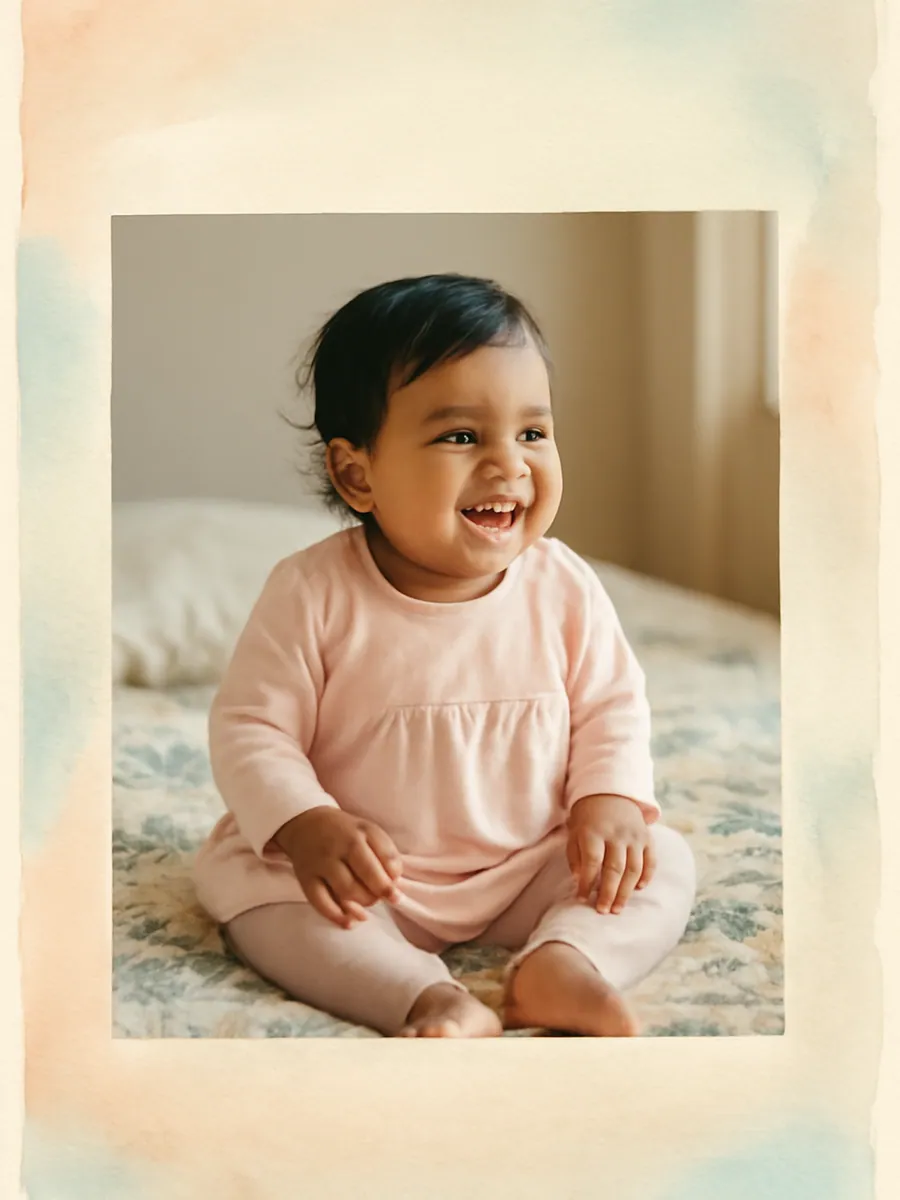
In the first year most babies go from smiling at faces (around 2 months) to laughing and rolling (around 6 months), sitting and babbling (around 9 months) and pulling up to stand and waving bye-bye (around 12 months). Many Indian families hold a naamkaran in the first weeks, an annaprashan around the time solids begin and a first birthday at 12 months, though timing varies by family, region and community. These are guides, not tests: every baby develops at their own pace, so ask your paediatrician if anything worries you.
- Milestone lists show what most babies do by a certain age. Healthy babies reach them across a wide range of ages.
- WHO found that healthy babies, including babies in India, learn to walk alone anywhere from about 8 to nearly 18 months.
- WHO advises breast milk only for the first six months and solid foods from six months, which is close to when many families hold annaprashan.
- Naamkaran, annaprashan, mundan and ear piercing have flexible windows that vary by family, region and community.
- If your baby loses a skill they had, or you have any worry, talk to your paediatrician early rather than waiting.
How to read a milestone list
A milestone is something most babies can do by a certain age, like smiling, rolling over or waving. The CDC publishes simple checklists for 2, 4, 6 and 9 months and 1 year, and lists what most babies do by each age 1. That means some babies get there earlier, and some a little later.
The range is wider than most of us expect. A WHO study followed healthy babies in Ghana, India, Norway, Oman and the USA and measured when they reached six movement milestones. Sitting without support happened anywhere from about 3.8 to 9.2 months, and walking alone from about 8.2 to 17.6 months 2. The researchers described these windows as normal variation among healthy children 2.
So use the list below as a gentle guide. Every child develops at their own pace. If something worries you, ask your paediatrician. If your baby was born early, tell your paediatrician that too, since it can change what to expect.
Milestones from birth to 12 months at a glance
Here is a quick view of what many babies are doing at each checkpoint, with the family occasions that often fall nearby. Ceremony timing is only a rough guide, because practice varies by family, region and community.
| Age | What many babies are doing | Occasions that often fall nearby |
|---|---|---|
| First weeks | Feeding, sleeping and getting used to your voice and touch | Naamkaran, often held between day 11 and day 41 4 |
| Around 2 months | Smiles when you talk to them, looks at your face, makes sounds other than crying, holds head up on tummy | Baby's first visits from relatives |
| Around 4 months | Chuckles, coos back at you, holds head steady when held, grasps a toy, brings hands to mouth | A first festival, depending on the birth month |
| Around 6 months | Laughs, blows raspberries, knows familiar people, rolls from tummy to back, reaches for a toy | Annaprashan, mukhe bhaat or choroonu, often between 5 and 8 months 5 |
| Around 9 months | Shy with strangers, babbles mama and baba, looks when you call their name, sits without support | First Diwali, Eid, Christmas, Lohri or Pongal for many babies |
| Around 12 months | Waves bye-bye, calls a parent mama or dada, pulls up to stand, walks holding furniture, picks up small bits of food | First birthday. Some families plan ear piercing or mundan around now or later 4 |
Birth to 3 months: faces, smiles and a name
The early weeks are mostly about feeds, sleep and comfort. By about 2 months, many babies calm down when picked up, look at your face and smile when you smile at them 1. They start making sounds other than crying and can lift their head a little during tummy time 1.
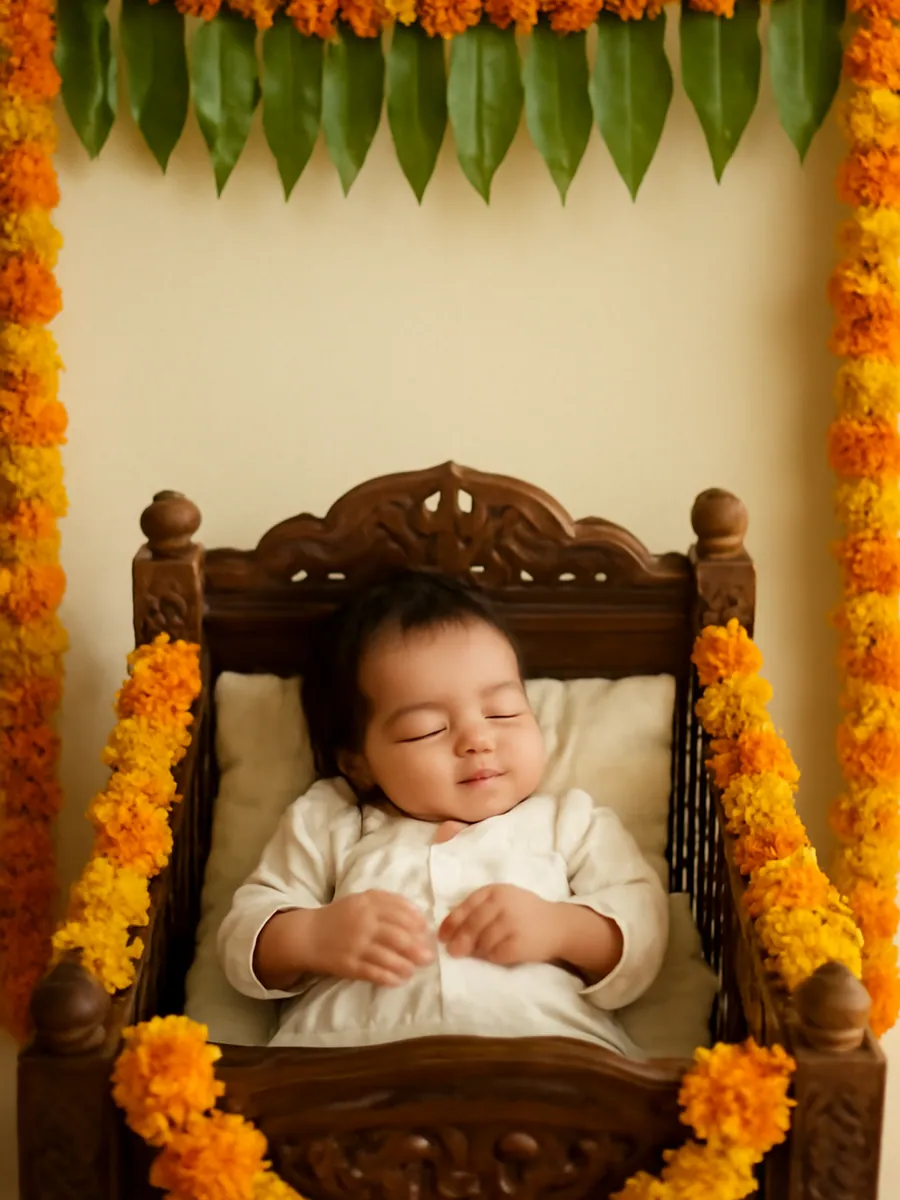
This is also when many Hindu families hold the naamkaran, the naming ceremony. A Hinduism Today magazine feature places it anywhere from 11 to 41 days after birth, at home or in a temple 4. Some families choose the name together with grandparents, others announce it at a small puja or a family lunch. Sikh, Muslim, Christian and Parsi families have their own naming customs, and practice varies by family, region and community. For more on each tradition, see our guide to Indian baby ceremonies.
4 to 6 months: laughs, rolling and the first bite
Around 4 months, many babies chuckle, coo back when you talk, hold their head steady and grab a toy you put in their hand 1. By about 6 months, many laugh, blow raspberries, know familiar faces and roll from tummy to back 1.
WHO advises breast milk only for the first six months, with safe solid foods introduced from six months and breastfeeding continued alongside 3. Check with your paediatrician before you start solids, especially if your baby was born early or has any health condition.
That timing sits close to annaprashan, the first rice ceremony. It is often held between about 5 and 8 months, and is called mukhe bhaat in Bengal and choroonu in Kerala 5. In some Bengali and Telugu families, the month chosen differs for boys and girls 5. Many families also place a book, a pen, coins and a little soil in front of the baby and watch what they reach for 5. It is a playful family moment, and practice varies by family, region and community. Our annaprashan guide has more on how families mark the day.
7 to 9 months: sitting, babbling and stranger shyness
By about 9 months, many babies sit without support, get into a sitting position on their own and pass things from one hand to the other 1. They babble sounds like mama and baba, look when you call their name and may cry when you leave the room 1. Shyness with new people is normal at this age, so do not worry if your baby hides from a visiting aunt.
Crawling has a very wide window. In the WHO study, healthy babies started crawling on hands and knees anywhere from about 5.2 to 13.5 months 2. Some babies shuffle or roll instead. If you are unsure, ask your paediatrician at the next visit.
Depending on the birth month, this is often the first big festival. A baby's first Diwali, Eid, Christmas, Lohri or Pongal tends to bring a lot of photos and a lot of relatives.
10 to 12 months: standing, waving and the first birthday
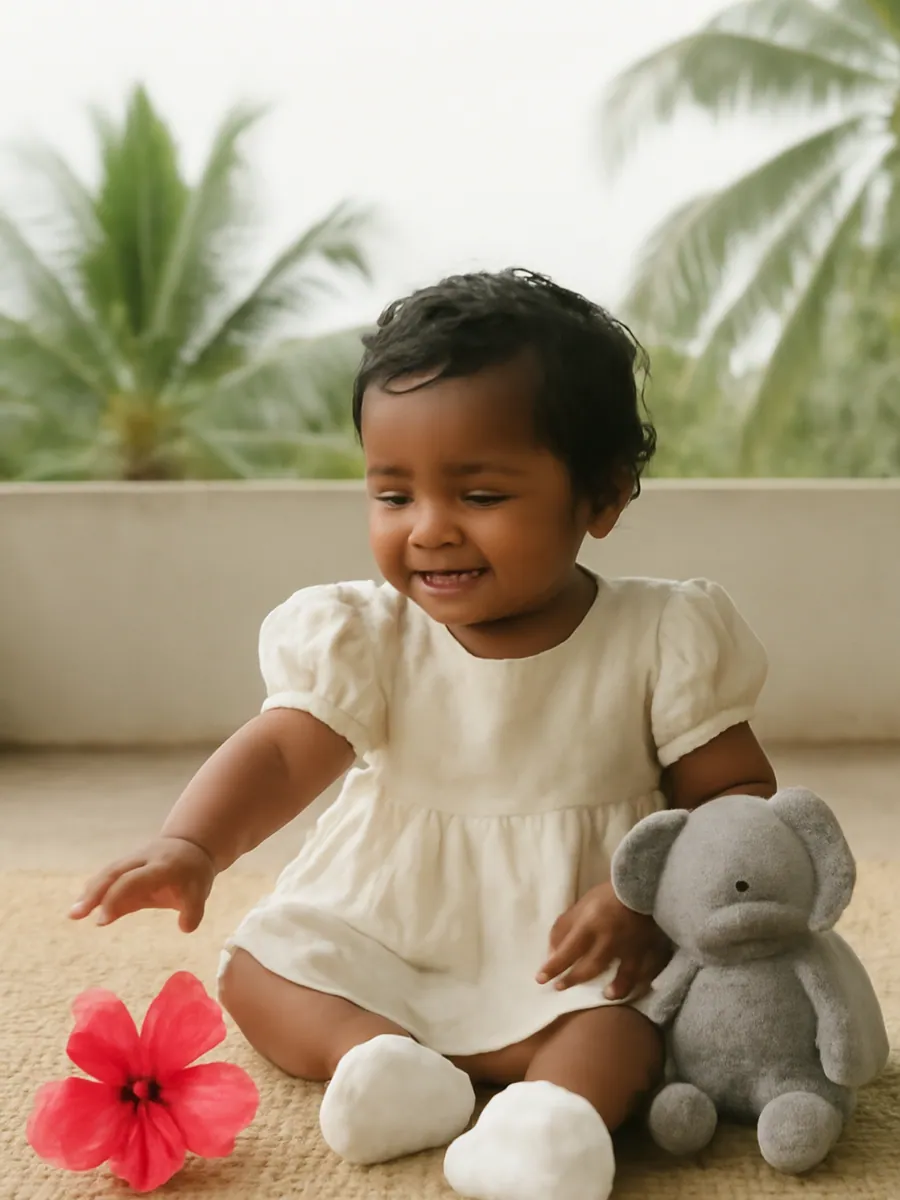
By the first birthday, many babies wave bye-bye, call a parent mama or dada, understand no, pull up to stand and walk while holding furniture 1. Many can pick up a small piece of food with the thumb and first finger 1.
Not walking yet at 12 months is common. WHO found that healthy babies started walking alone anywhere from about 8.2 to 17.6 months 2.
Some childhood ceremonies also cluster around or after the first year. One account notes that the mundan, or first head shave, may be done any time from the 31st day to the fourth year, and that ear piercing is often done in the first, third or fifth year 4. Many families wait until after the first birthday, and practice varies by family, region and community. Ideas for the day itself are in our first birthday album title ideas.
When to talk to your paediatrician
The CDC suggests acting early if your baby is not meeting one or more milestones, has lost skills they once had, or if you have any other concern 1. Share what you have noticed with your doctor and ask about developmental screening 1. In the US, the American Academy of Pediatrics recommends general developmental screening at 9 months 1. In India, your baby's regular vaccination visits are a good time to raise questions.
This guide is general information, not medical advice.
Simple ways to record milestones as they happen
Memories of the first year blur fast. A few small habits make it easy to look back.
- Take one photo on the same date each month, in the same spot, so the change is easy to see.
- Keep a running note on your phone: the date and one line, such as "Aarav laughed at Nani's glasses today".
- Record a 30 second voice note of the babbling stage. You will want to hear it later.
- Ask relatives to send ceremony photos as documents, not as normal WhatsApp photos, so they stay sharp. See how to save WhatsApp photos in full quality.
- Save short videos of first rolls and first steps. A still frame often makes the best photo of the moment.
Turning the first year into a book
If you would like those photos and notes in one place, Chalk Art has a month by month first year book. You pick photos from your phone or Google Photos, tap a few short answers about each stage, and we sort what you pick into months and ceremonies. You see a full preview before you confirm.
Only a parent or legal guardian can make a book with a baby's photos. Source photos auto-delete 30 days after delivery, you can delete everything in one tap, and baby photos are never used for ads or AI training. Read more on our privacy page.
Questions
What milestones should a baby reach by 12 months?
By the first birthday, many babies wave bye-bye, call a parent mama or dada, understand no, pull up to stand and walk while holding furniture. These are what most babies do by this age, not a test. Every child develops at their own pace, so ask your paediatrician if you are worried.
My baby is not crawling at 9 months. Should I worry?
Not necessarily. In a WHO study, healthy babies started crawling anywhere from about 5 to 13 and a half months, and some babies shuffle or roll instead. Mention it to your paediatrician at the next visit if you are unsure.
When is annaprashan done?
Many families hold annaprashan between about 5 and 8 months, close to when WHO advises starting solid foods at six months. Some families pick different months for boys and girls. Practice varies by family, region and community, so follow what your family does and check with your paediatrician before starting solids.
When is the naamkaran ceremony held?
Many Hindu families hold the naamkaran in the first weeks after birth, often somewhere between day 11 and day 41. Other communities have their own naming customs, and practice varies by family, region and community.
Do these ages apply if my baby was born early?
Tell your paediatrician that your baby was born early. They may look at progress differently, and they can tell you what to expect for your baby.
Is the mundan done in the first year?
Not always. The first head shave may be done any time from the first month to about the fourth year, and many families wait until after the first birthday. Practice varies by family, region and community.
Sources
- CDC's Developmental Milestones (milestones by age, with checklists for 2, 4, 6 and 9 months and 1 year), Centers for Disease Control and Prevention (CDC). Accessed 31 October 2026.
- WHO Motor Development Study: windows of achievement for six gross motor development milestones, WHO Multicentre Growth Reference Study Group, Acta Paediatrica (PubMed). Accessed 31 October 2026.
- Infant and young child feeding, World Health Organization. Accessed 31 October 2026.
- Samskaras (October 1994), Hinduism Today. Accessed 31 October 2026.
- Annaprashana, Wikipedia. Accessed 31 October 2026.