Travel photo books
Travel photo book ideas: pages that are not just photos
The travel photo books people reread mix photos with pages that tell the story: a route map and itinerary, one spread per day, a collage of tickets and boarding passes, a food page, a list of firsts, things people said, the best and worst moments, and a closing page. Plan about 24 inside pages, give each day one strong photo and one line, and add three or four of these story pages. Below is a page plan you can copy, with ideas for family, friends and yatra trips.
- Plan the pages before you pick photos: an opening route map, day-by-day spreads, a few story pages and a closing page.
- Give each day one hero photo and one honest line. That alone turns a photo dump into a story.
- Story pages such as firsts, quotes from the trip, food and the funniest disaster are often the pages people reread.
- Photograph tickets and boarding passes for the collage, and hide barcodes and booking references before you share a digital copy.
- For a yatra book made for elders, use large print, captions in the language they read and a calm, respectful design.
A 24-page plan you can copy
Most trip albums stall because there are 900 photos and no plan. Decide what each page is for first, then find photos for it. A five-day trip fits well in about 24 inside pages. A longer trip can take two spreads for its busiest days.
This plan covers the inside pages only. For the front of the book, see our travel photo book cover ideas.
| Pages | What goes there | Photos |
|---|---|---|
| 1 | Title page and a short note on who went and why | 1 |
| 2 to 3 | Route map and itinerary | 0 to 4 |
| 4 to 13 | Day-by-day spreads, two pages per day | 25 to 40 |
| 14 to 15 | Tickets, boarding passes and bits of paper | 6 to 12 |
| 16 to 17 | Food page | 6 to 10 |
| 18 | Firsts list | 2 to 4 |
| 19 | Things people said | 2 to 4 |
| 20 to 21 | Best and worst moments | 4 to 6 |
| 22 to 23 | Favourite photo of each person | 4 to 8 |
| 24 | Closing page | 1 |
Route map and itinerary page
Open the story with where you went. A simple drawn map with dots and a dotted line is enough: Mumbai to Goa to Gokarna, or Delhi to Haridwar to Kedarnath. Under it, add an itinerary strip with one row per day: date, place, and how you got there (train, car, ferry, a long walk).
If you had Google Maps Timeline turned on during the trip, it can help you rebuild the route day by day. Timeline is off unless you chose to switch it on, its data comes from your phone (with an optional encrypted backup) and it does not open in Maps on a computer 1. If it was off, your tickets, hotel bookings and the dates on your photos will do the job.
Small details make this page: the distance driven, the number of trains, the highest point you reached, how many chai stops. Rough guesses are fine. Nobody will check.
Day-by-day spreads
Day pages are the backbone of the book. Give each day one large hero photo, three or four smaller ones and a single line of text. Write the line like a diary, not a brochure: "Day 3, Munnar. Rain all morning, so we played antakshari in the homestay until Ishaan won by cheating."
To find a day's photos fast, search Google Photos by a place name or a description such as "beach" or "temple" 4. Watch the dates. Google Photos files photos taken before 4 AM under the previous day, and photos from a phone with different date and time settings can carry the wrong timestamp 5. That matters on trips with a late-night arrival, an early flight or a time zone change.
Quiet days are fine. A day spent at Nani's house in Kozhikode or a rest day by the hotel pool can share a spread with the day before it.
Ticket and boarding-pass collage
Train tickets, boarding passes, museum entry slips, a ferry token, a parking receipt from a hill station: put them on one or two pages. They date the trip better than any caption.
Lay the papers flat on a plain table in daylight and photograph them from straight above. Print the photographs and keep the originals in an envelope. If you want the real slips in a paper scrapbook, use photo corners rather than self-adhesive tape, which the Library of Congress advises against for albums 2.
One caution before you share a digital copy on WhatsApp or social media. The barcode on a boarding pass is linked to your booking and can show your name and your booking reference, also called the PNR 3. Blur or crop the barcode and the PNR on your collage page. Do the same with ticket numbers, phone numbers and ID cards that crept into photos.
The food page
Every Indian trip has a food story. Give it a page: the best thali, the bad pasta at the highway dhaba, the street where everyone ate three plates of momos. Add one line under each photo saying who ordered it and what they said.
Ideas that work well: a "top five things we ate" list, a photo of the menu card from a favourite place, a ranking of every chai on the trip, or the dish the children refused and then asked for again. On a yatra, this page can hold the prasad, the langar or the simple dal-chawal at a dharamshala, if your family is comfortable including it.
Firsts list and quotes from the trip
The firsts list. Write down everything that happened for the first time: first flight, first snow, first sea, first passport stamp, first time Papa tried a cable car, first time Aditi swam without armbands. Short lines in a list look good next to one or two photos.
Things people said. Keep a note on your phone during the trip, or ask everyone in the family or WhatsApp group to send you their favourite line afterwards. Put each quote on the page with the person's name and one photo of them. A few examples of the kind of line that works:
- "Sea is just a very big swimming pool, Amma." (Kavya, 5)
- "I am not lost. I am exploring." (Rohan, two hours before we found the car)
- "Bas, one more photo." (Mummy, forty-one times)
- "Next year, Ladakh." (Gurleen, every single evening)
Best and worst moments
A spread with two columns, best on the left and worst on the right, is often the funniest page in the book. The worst side should be things that are funny now: the missed train, the hotel that looked nothing like its photos, the monkey that took the sunglasses.
Ask each person for one best and one worst moment in a single line. For a friends trip, add a short awards list: the planner, the one who was always late, the one who fell asleep first, the one who lost something every day. Keep it kind. Everyone will get a copy, and the book will be read for years.
Ideas for family, friends and yatra trips
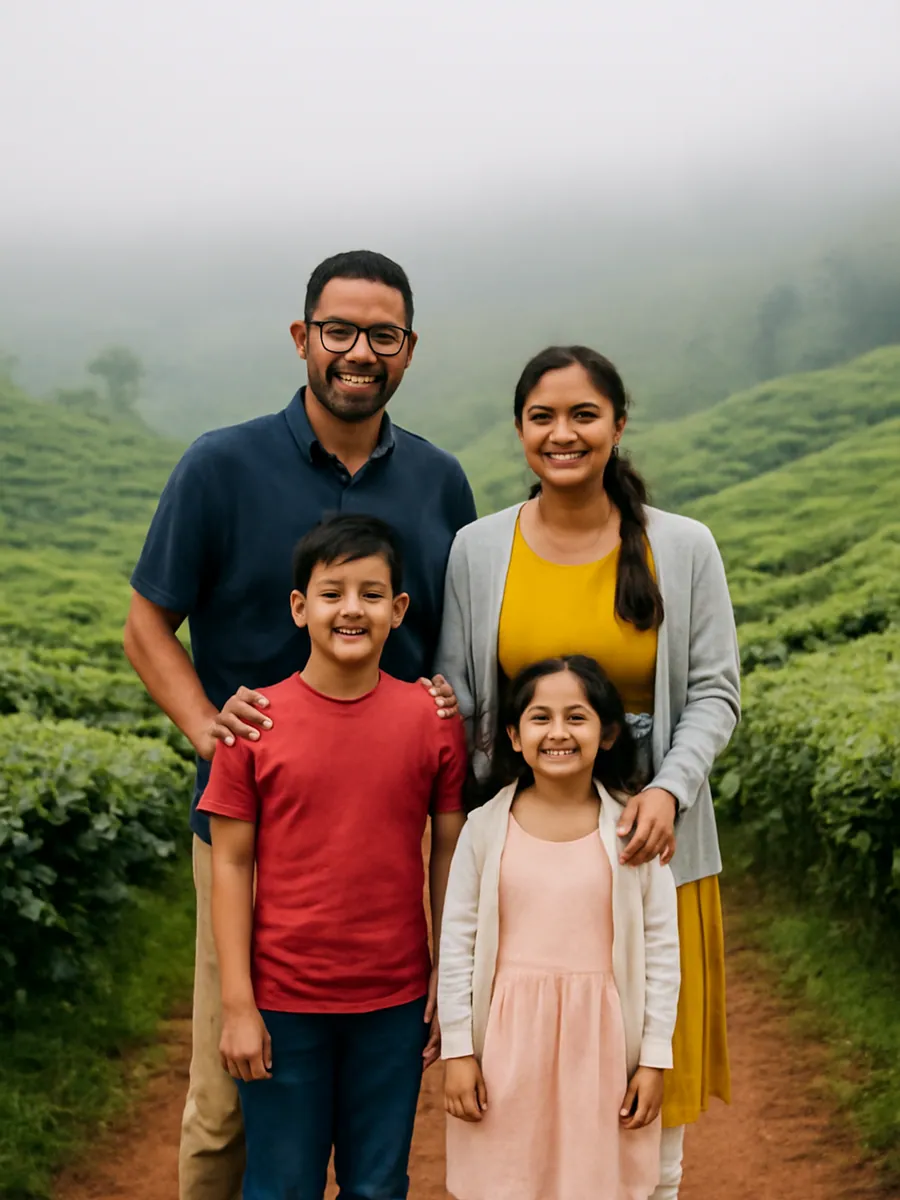
Family holiday. The Iyers' week from Munnar to Alleppey could have a "kids' favourite things" page in the children's own words, a page of houseboat photos, and a page for the grandparents with large photos and fewer words. See more on family holiday books.
Friends trip. Tanvi, Imran, Lalit and Sneha's Gokarna trip suits an instant-photo layout with white borders, an inside jokes page, the awards list and a group photo of everyone on the last night. Collect photos from every phone, and ask friends to send originals rather than compressed chat copies. Our guide to saving WhatsApp photos in full quality explains how.
Yatra with parents. A Char Dham or Vaishno Devi book is often made by grown children for their parents. Use large print, captions in the language your parents read most easily, and a calm design. A first page can carry a prayer line or blessing chosen by the family. The way a yatra is done and remembered varies by family, region and community, so let your parents decide what goes in and what stays private. More ideas are on the yatra book page.
The closing page
End with a page that feels like coming home: the last photo of the trip, the luggage piled at the door, or the whole group at the station. Add a short note on what you want to remember, and one line about the next trip, even if it is only a wish.
If you have short videos, a page of stills from them can sit just before the closing page. Our guide to videos in a printed photo book covers how. For the step-by-step process from photos to finished book, read how to make a travel photo book.
Chalk Art can lay this out as a book for you: make one here.
Questions
What should I put in a travel photo book besides photos?
A route map, an itinerary strip, a collage of tickets and boarding passes, a food page, a list of firsts, quotes from the people on the trip, a best and worst moments spread and a closing page. Three or four of these are enough.
How many pages does a travel photo book need?
About 24 inside pages suits a trip of four to six days: two pages per day plus a few story pages. A weekend trip fits in 12 to 16 pages, and a long trip can go to 32 or more.
How many photos should I use?
Plan on about three photos per page on average, so a 24-page book holds roughly 50 to 90 photos, with more on busy day spreads and fewer on story pages. One large photo with a few smaller ones looks better than a crowded grid.
Is it safe to include boarding passes in a photo book?
In a printed book kept at home, yes. Before you share a digital copy, blur or crop the barcode and the booking reference, because they are linked to your booking and can show personal details.
How do I make a yatra photo book for my parents?
Use large print, captions in the language they read most easily and a calm design. Ask them which moments matter most and what they would rather keep private, since every family remembers a yatra in its own way.
Sources
- Manage your Google Maps Timeline, Google Maps Help. Accessed 31 October 2026.
- Preservation measures for scrapbooks and albums, Library of Congress. Accessed 31 October 2026.
- Bar-coded boarding pass, Wikipedia. Accessed 31 October 2026.
- Search by people, things & places in your photos, Google Photos Help. Accessed 31 October 2026.
- Find lost photos & videos, Google Photos Help. Accessed 31 October 2026.