Wedding photos and the law
Who owns your wedding photos in India? Copyright basics for couples
Under the Copyright Act, 1957, when a photographer is paid to shoot at someone's request, the person who commissioned and paid is the first owner of the copyright, unless an agreement says otherwise. So by default the couple, or the family member who booked and paid, owns the wedding photos and video. Many photography contracts change this, so the signed contract is what really decides it.
- The photographer is the author of the photos, but for a paid shoot the person who commissioned it is the first copyright owner by default.
- A written contract can change that default, and many studio contracts keep copyright with the studio and give you a licence.
- Even if you own the copyright, the photographer keeps the right to be credited and to object to distortion of the work.
- Guests and friends who shoot for free own the photos they take, so ask before you print or publish them.
- Privacy is a separate question from copyright: agree in writing what the photographer may post on social media.
The default rule: whoever commissioned and paid
Indian copyright law starts with a simple idea. The author of a photograph is the person who takes it 1. Normally the author is also the first owner of the copyright. But the Act makes an exception that matters a lot for weddings.
Section 17(b) says that when a photograph is taken for valuable consideration at the instance of any person, that person is the first owner of the copyright, in the absence of any agreement to the contrary 1. The same clause covers cinematograph films, which is how the law treats your wedding video 1.
In plain words: if you booked and paid a photographer, the law starts from the position that you own the copyright in the photos. The person who owns them is whoever commissioned and paid. In many Indian weddings that is a parent, or both families share the cost, so it helps to know whose name is on the booking and the bills.
The words "in the absence of any agreement to the contrary" do the heavy lifting. A signed contract can change the default 1. Many photography contracts do exactly that: the studio keeps the copyright and gives the couple a licence to use the photos for personal purposes. Read the copyright clause before you sign, not after the Drive link arrives.
Who owns what at a typical Indian wedding
A wedding produces photos from many hands: the hired team, a cousin with a good camera, and a hundred guests with phones. The default position differs for each.
The paid exception depends on the shoot being done for valuable consideration, which usually means payment. A favour done for free normally falls back to the general rule, where the person who took the photo is the owner 1.
| Situation | Likely first owner by default | What to check |
|---|---|---|
| Photographer you booked and paid | You, as the person who commissioned and paid 1 | Whether the contract says the studio keeps copyright |
| Photographer booked and paid by a parent | The parent who commissioned and paid 1 | Ask that parent to agree in writing if you want the rights in your name |
| Paid videographer or wedding film team | The person who commissioned and paid, since the clause covers films 1 | The contract terms, and that the songs used keep their own copyright 2 |
| A friend or cousin shooting for free | The friend, as the person who took the photos 1 | Ask before you print or publish their photos |
| Guests' phone photos | Each guest who took them 1 | Ask before using them in a printed book or a public post |
| Your own phone photos and selfies | You, as the person who took them 1 | The people in them may still care where the photos end up |
What the photographer keeps, even if you own the copyright
Owning the copyright does not wipe out the photographer's connection to the work. Section 57 gives an author special rights that stay with them even after the copyright is assigned: the right to claim authorship, and the right to object to distortion, mutilation or modification of the work that would harm their honour or reputation 1. The 2012 amendment removed the time limit on the second right 2.
In practice this means a photographer can ask to be credited. Ordinary cropping for an album is unlikely to be the kind of change this section is aimed at, but heavy alterations presented as their work could be a different matter. It is a judgement made case by case.
Copyright also lasts a long time. After the 2012 amendment, photographs follow the general rule for artistic works 2: copyright runs until 60 years from the beginning of the calendar year after the author dies 1. The author here is still the photographer, so the clock is measured by their lifetime, even if you are the owner.
One more practical point. Owning the copyright in the photos you receive does not, on its own, decide whether the studio must hand over its RAW files or every outtake. What you get, in what resolution and by when, is a matter for the contract. Spell it out.
When the contract says the studio keeps the copyright
This is common, and it is not unfair in itself. Studios use their work to find new clients. What matters is that the licence they give you is wide enough for how your family will actually use the photos.
If you want the copyright moved to you instead, the Act is clear on form. An assignment is valid only if it is in writing and signed by the person assigning it 1. If an assignment does not say how long it lasts, it is treated as five years from the date of assignment, and if it does not say where it applies, it is presumed to cover India only 1. So a vague line like "all rights to the client" is weaker than a clause that says the copyright is assigned for its full term, worldwide.
If the studio keeps the copyright, make sure your written licence covers at least these uses:
- Printing albums and photo books at any lab or service, not only through the studio.
- Making extra copies for both families, grandparents and relatives abroad.
- Posting on your own social media and sharing on WhatsApp.
- Using photos on invitations or thank-you cards for later events.
- Keeping this right forever, not for a fixed number of years.
Your face and your privacy are a separate question
Copyright is about who controls copies of the photo. It does not settle whether a photographer may put your haldi or getting-ready pictures on their public Instagram page. Many families have strong feelings about that, especially for brides, elders and children.
India's Digital Personal Data Protection Act, 2023 sets out rights over digital personal data, including the right to give or refuse consent, to withdraw consent at any time, and to ask for correction and, in certain situations, removal 3. For a child, the person who exercises these rights includes a parent or lawful guardian 3. The rules under the Act were notified on 14 November 2025 with an eighteen-month period for phased compliance 3, so some of these duties are still coming into force.
Because the law is still settling in, the most reliable protection is a clear clause in your contract. Say which functions the photographer may use for their portfolio and ads, and which they may not. Ask that no child is posted publicly without a parent's yes.
Questions to ask your photographer before you sign
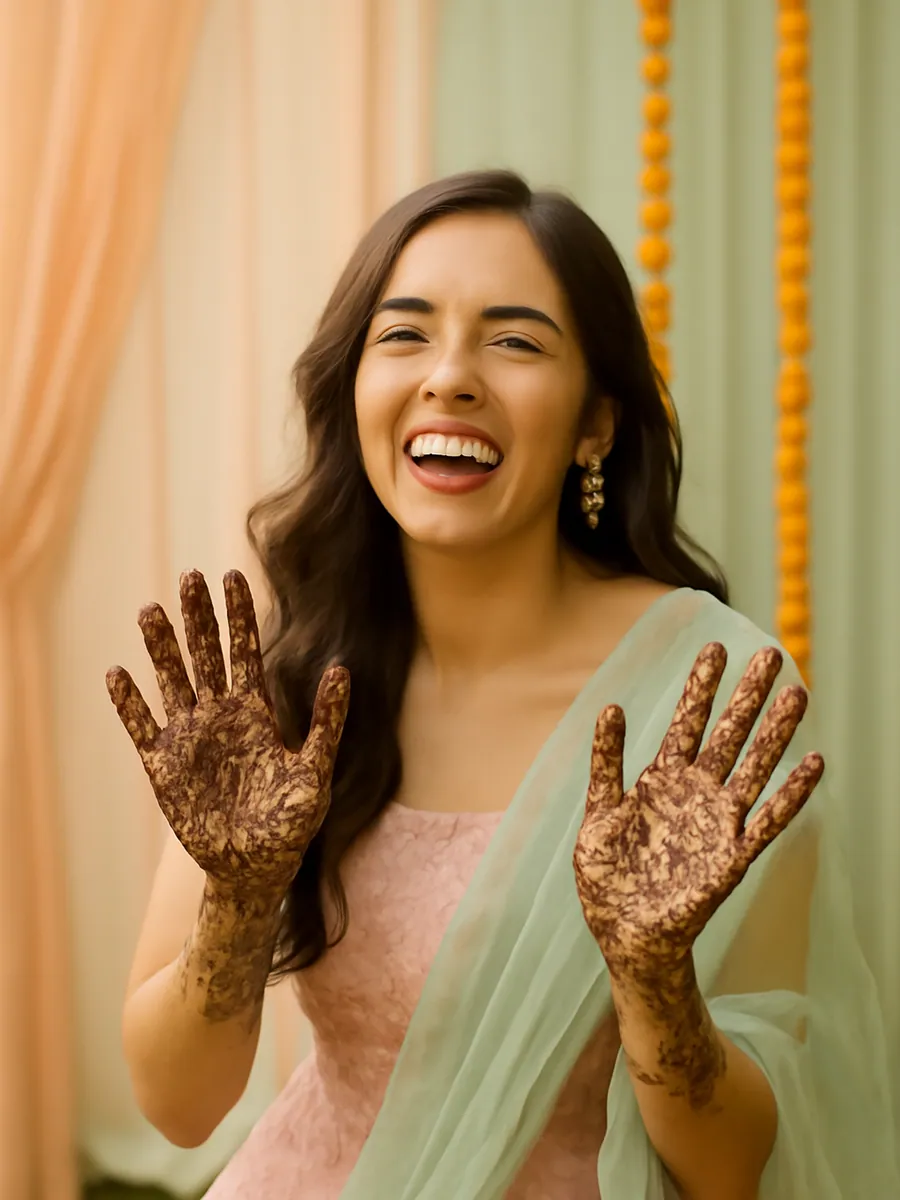
Take these to the meeting, and ask for the answers to go into the written contract rather than a WhatsApp chat. Take Ishita and Farhan, who book a studio in Lucknow: if their contract is silent on social media and a mehendi photo they never wanted public turns up online, they are left arguing over the default rules after the fact, when one clear clause would have settled it before the wedding.
- Who will own the copyright in the photos and the wedding film?
- If you keep the copyright, can we print anywhere, make unlimited copies and post online, for as long as we like?
- Can you use our photos for your portfolio, website, Instagram or ads? Which functions, and can we say no to some?
- When will we get the full set of edited photos, at what resolution, and how: a Drive link, a pen drive or both?
- Are RAW files included, and how long will you keep backups?
- Is the music in the wedding film licensed for the way we plan to share it?
Making your own albums from the photos
Once the photos arrive, most families want more than one album: a full one for the couple, smaller copies for each set of parents, and something for the nani who could not travel. If you own the copyright, or your licence covers printing elsewhere, you are free to make these yourself.
Guest photos are often the funniest and most candid ones. Since each guest owns what they shot, collect them with a clear ask. Our guide to guest photo QR codes for Indian weddings covers how to do that politely, and how many photos go into a wedding album helps you plan the edit.
Chalk Art can lay this out as a book for you: make one here.
Questions
Can my wedding photographer post our photos on Instagram without asking?
If you own the copyright, the photographer needs your permission to publish the photos. Many contracts include a clause that gives this permission for portfolio use, so check yours. Privacy is a separate issue, and the simplest protection is a written clause saying which photos may be posted.
Who owns our wedding video?
The same Section 17(b) rule covers cinematograph films, so by default the person who commissioned and paid for the film is the first owner, unless the contract says otherwise . Songs used in the film keep their own copyright .
Can I print our wedding photos at any lab or photo book service?
If you own the copyright, yes. If the studio kept the copyright, it depends on what your licence allows. Ask for a clause that lets you print anywhere and make as many copies as you like.
Can I put photos that guests took into our wedding album?
Each guest is the author and owner of the photos they took on their own phone . Ask them first. Most guests are happy to share when you ask clearly and tell them where the photos will be used.
My parents paid the photographer. Do they own the photos?
By default, the person at whose instance and payment the photos were taken is the first owner . If you want the rights in your own name, ask your parents and the studio to put it in writing.
Sources
- The Copyright Act, 1957 (Act No. 14 of 1957), consolidated text, WIPO Lex, World Intellectual Property Organization. Accessed 31 October 2026.
- The Copyright (Amendment) Act, 2012 (Act No. 27 of 2012), WIPO Lex, World Intellectual Property Organization. Accessed 31 October 2026.
- DPDP Rules, 2025 Notified (backgrounder), Press Information Bureau, Government of India. Accessed 31 October 2026.