Life story book guide
How to make a life story book for your parents
Ask your parent first and agree that they can skip any question or stop at any time. Pick six to eight themes, such as childhood, marriage and work, with three or four open questions each. Record short sessions in a quiet room or by voice note, transcribe word for word, then shape the text into chapters that keep their own words. Add labelled old photos, let them read or hear the draft, and only then print it.
- It is their story, so their agreement comes first, and they decide what stays out.
- Six to eight themes with three or four open questions each is enough for a first book.
- Short sessions of 30 to 45 minutes, one theme at a time, work better than one long interview.
- Edit for clarity, never for content: keep their phrases and dialect words, and add no events.
- Keep the original recordings in at least two places. Their voice is part of the gift.
Step by step
- Get their agreement
Explain what the book is for and who will read it. Agree that your parent can skip any question, stop at any time and remove anything before print.
- Choose themes and questions
Pick six to eight themes with three or four open questions each, in the language your parent thinks in.
- Record short sessions
Use your phone's recorder in a quiet room, one theme per 30 to 45 minute session, or send one question at a time for voice note replies.
- Transcribe word for word
Type out every recording exactly as spoken, including phrases in their own language, before tidying anything.
- Edit in their voice
Cut repeats and group stories into chapters. Keep their phrases, add no events, and check any unsure names, dates and places with them.
- Add and label old photos
Photograph old prints in daylight without flash, ask your parent to name everyone, and give each file a descriptive name.
- Review, print and keep copies
Let your parent read or hear the draft first, print in one clear font, and keep the recordings and photos in at least two places.
What a life story book is
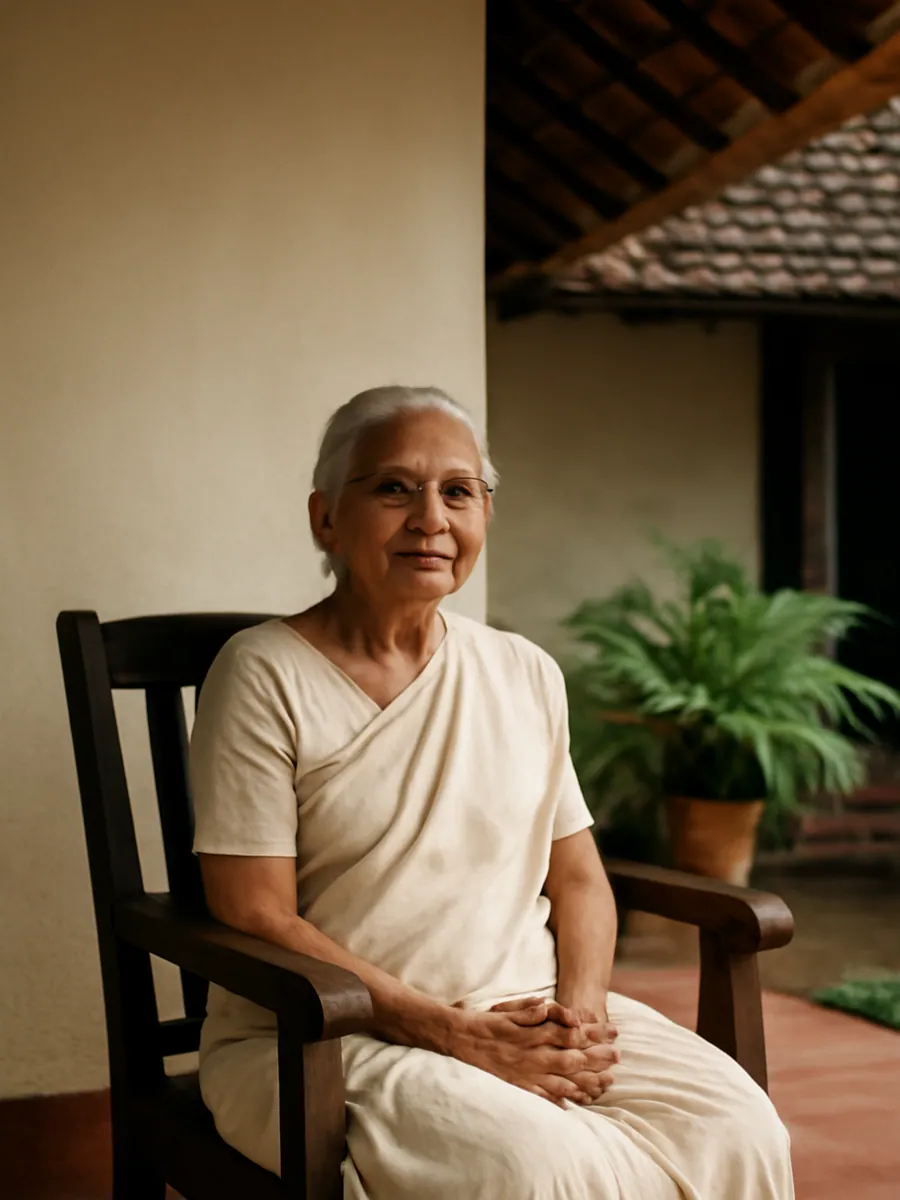
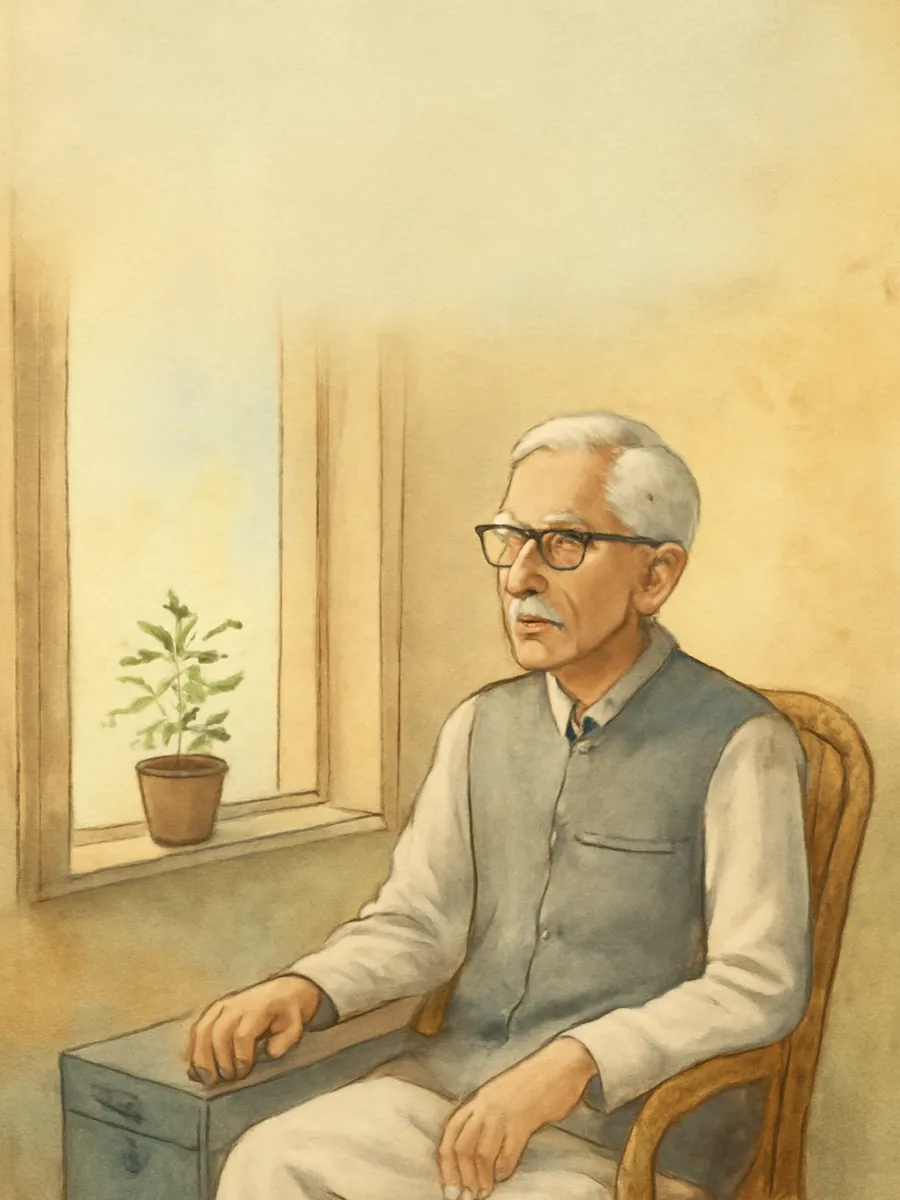
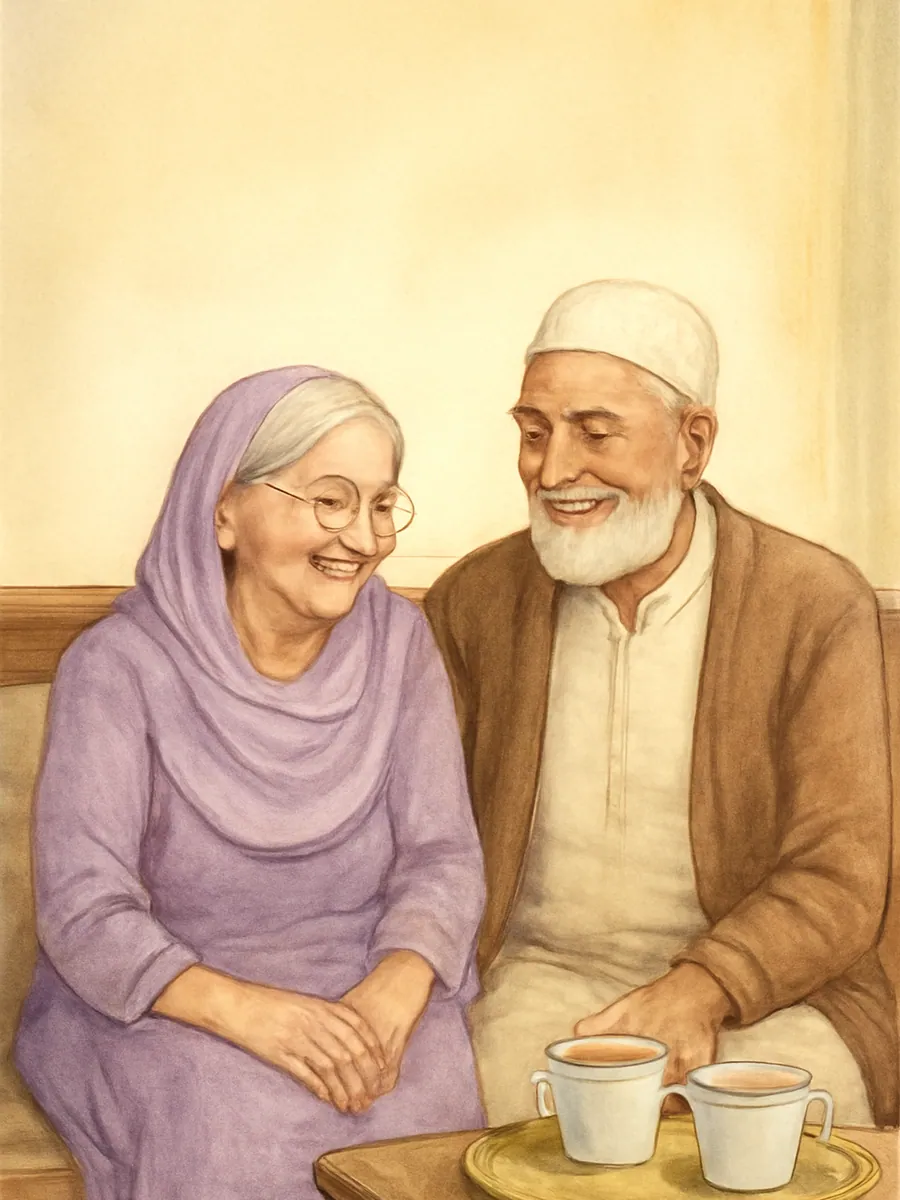
A life story book is a short memoir of your mother or father, told in their own words and set alongside old family photos. It is not a biography you write about them. You ask, they speak, and the book keeps their voice: the way Amma says "in those days" or Baba switches into Bangla when the story gets good.
A first book can be finished in a few weeks of short conversations. You do not need to be a writer: you need good questions, a phone that records and a few evenings to tidy the words.
Start with their agreement
Before you record anything, sit with your parent and explain the plan: what the book is for, who will read it, how you will record, and that they will see it before anyone else does. Oral historians agree on this before recording starts, and they respect a narrator's right to refuse certain subjects or limit who can hear the interview 1.
Say it plainly: "You can skip any question, and we can stop whenever you like." Many parents relax once they hear that. Some prefer a grandchild or cousin to do the asking, which is fine as long as your parent agrees to who records.
If your parent's memory is fading, let them lead and let family fill gaps with their permission. Mark those chapters "as told to". Dementia UK's life story guidance, written for dementia care but useful for any elder, advises following the person's lead, going at their pace and asking other family members when communication is hard 2. This is general information, not medical advice: if you are worried about your parent's memory, talk to their doctor.
- Their choice: they agree to take part and can say no to any topic.
- People in the stories: use first names for neighbours, colleagues and old friends, and let the family review those passages before print.
- Grandchildren: first names only, and only photos their own parents are happy to include.
Choose themes and questions
Pick six to eight themes your parent will enjoy, not every chapter of a life. Write three or four open questions for each. Open questions start with "tell me about", "what was it like" or "how did you", and they invite stories rather than yes or no. Oral history practice also leans on follow-ups that ask for detail and reflection 1.
The table below is a starting set. Ask in whichever language your parent thinks in, and let them answer in their own style 1. For more ideas, see this longer list of questions to ask your parents about their life.
| Theme | Opening question | In Hindi |
|---|---|---|
| Roots | Tell me about the house you grew up in. What could you hear from the courtyard? | Jis ghar mein aap bade hue, uske baare mein bataiye. Aangan se kya sunai deta tha? |
| Childhood | Who did you spend your summer holidays with, and what did you get up to? | Garmi ki chhuttiyan kiske saath bitate the, aur kya shararat karte the? |
| Growing up | What did you want to become when you were fifteen? | Pandrah saal ki umar mein aap kya banna chahte the? |
| Marriage | What do you remember about the first time you met? | Pehli mulaqaat ke baare mein aapko kya yaad hai? |
| Work and home | What was a normal working day like when we were small? | Jab hum chhote the, tab aapka ek aam din kaisa hota tha? |
| Hard times | Was there a year that tested the family? How did you manage? | Kya koi aisa saal tha jo bahut mushkil raha? Aapne kaise sambhala? |
| Proud moments | What are you quietly proud of that we may not know about? | Aisi kaun si baat hai jis par aapko garv hai, par humein shayad pata nahi? |
| For the family | What would you like your grandchildren to know about you? | Aap apne pote-potiyon ko apne baare mein kya batana chahenge? |
Record short, relaxed sessions
Your phone's voice recorder is enough. Choose a quiet room away from the pressure cooker, the TV and the ceiling fan's hum, since oral history practice asks for a quiet place with few distractions 1. Put the phone on a folded cloth close to your parent, and record a ten-second test first.
Start each session by saying both names, the date and a general place such as "Amma's home in Kottayam", not a full address 1. Take one theme at a time and stop after 30 to 45 minutes, or sooner if they tire. Dementia UK suggests working one topic at a time and taking breaks so the task never becomes overwhelming 2.
Listen more than you talk. Do not correct dates mid-story. Ask "and then?" or "what did that feel like?" and let the pauses sit.
If you live in another city or abroad, send one question at a time as a phone message and let your parent reply with a voice note whenever they like, or ask a visiting cousin to help them record. See also how to record grandparents' stories.
Transcribe, then edit in their voice
First, type out each recording word for word, including the Hindi, Malayalam or Gujarati phrases. Do not tidy yet. A faithful transcript is your reference whenever you are unsure what was said.
Then edit lightly. Cut repeats and false starts, group stories by theme, and add a one-line heading to each story. You do not have to follow the order of their life; Dementia UK points out that a life story need not be chronological or include everything, only what matters most 2.
The rule that protects the book: edit for clarity, never for content. Keep their sayings, their jokes and words like "arre" or "bhai". Do not invent a detail to smooth a gap, and do not add events they did not describe. Mark any name, date or place you are unsure of and check it with them.
Add old photos and label them
Open the steel trunk and the old albums together. Photograph prints with your phone flat on a table in soft daylight, with no flash, so there is no glare. Pick 20 to 60 photos that match the stories.
Ask your parent to name everyone in each picture while you record. If you write on a print, use a soft pencil on the back near the edge, hold prints by their edges, and keep tape and paper clips away from them 3.
Give each digital copy a descriptive file name and tag the people in it 4, for example "1979 Thrissur wedding Annamma and Joseph Varghese". Twenty years from now, that name will matter more than the picture's sharpness.
Review together, then print and keep copies
Read the draft aloud to your parent, or let them read it, before anyone else sees it. Oral historians give the narrator a chance to approve the result before it is shared 1. Remove anything they ask, without argument, then ask a sibling to check relatives' names.
Print in one clear, easy-to-read font at a generous size, with plenty of space around good photos. Dementia UK recommends simple, easy-to-read text in a single font and size for life story books 2, and larger type is kinder to older eyes in general. Choose a hardcover if the book will be passed down. Store the printed book and any original prints somewhere cool and dry, at around 21°C or below and 30 to 50 percent humidity, away from damp outer walls, and avoid sticky "magnetic" albums 3.
Finally, keep the recordings. Save at least two copies of the audio and photos in places as far apart as practical, check them once a year, and make fresh copies every five years 4. Common, non-proprietary file formats stay readable longer 1.
If you would rather not do the editing
Everything above can be done by hand. If transcribing and layout are what stop you, Chalk Art, a new service from Chalk Labs, is being built for this. Your parent agrees first, then answers one question at a time by voice note in their own language, and can skip any question. You pick old photos from your phone or Google Photos and we sort what you pick. You see a full preview before anything is printed.
Chalk Art can lay this out as a book for you: make one here.
Questions
How long does it take to make a life story book for parents?
With one or two short sessions a week, you can gather enough stories in three to six weeks. Transcribing and editing take a few more evenings. Rushing usually means fewer stories, so start well before any date you have in mind.
What if my parent does not want to talk about some things?
Then leave those topics out. Respecting a narrator's right to refuse certain subjects is a basic rule of oral history . A book with fewer chapters that your parent is happy with is better than a complete one they regret.
Can I make the book if my parent's memory is fading?
Often, yes, if they understand and want to take part. Keep sessions short, use photos and familiar music as prompts, and let family fill gaps with permission . Mark those chapters "as told to". This is general information, not medical advice.
Should the book be in English or their own language?
Write it in the language your parent spoke whenever you can, since that is where their voice lives. Many families make a bilingual book, with their words on one side and an English version for grandchildren on the other.
Do I need a written consent form for a family book?
For a private family book, a clear spoken agreement is usually enough. Oral historians document consent before recording , and the simplest way to do that at home is to record your parent saying yes at the start of the first session. If you plan to publish or share it widely, talk to them about that separately. This is general information, not legal advice.
Sources
- Oral History Best Practices, Oral History Association. Accessed 31 October 2026.
- Creating a life story for a person with dementia, Dementia UK. Accessed 31 October 2026.
- Care, Handling and Storage of Photographs, Library of Congress. Accessed 31 October 2026.
- Personal Archiving: Digital Photos, Library of Congress. Accessed 31 October 2026.